- >News
- >How to Use Polymarket in the US: Account, Deposits, Fees and Withdrawals

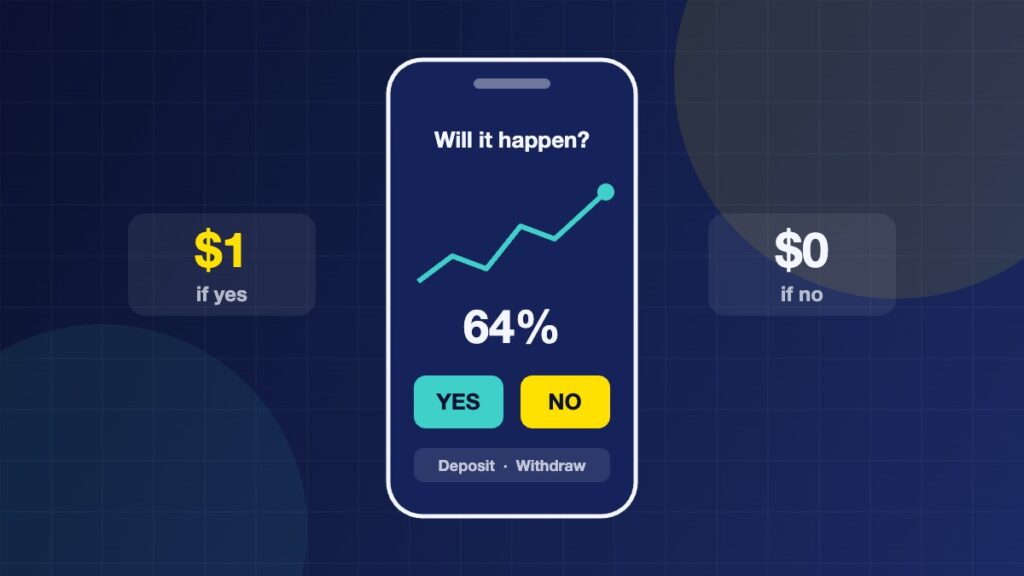
US residents use Polymarket US, a separate dollar-based exchange that the CFTC lists as a designated contract market. The international, crypto-based site at polymarket.com lists the United States among its blocked countries. On Polymarket US you verify your identity with a Social Security number, fund the account by debit card, bank transfer or a few other methods, and trade contracts that settle at $1 or $0. USDC appears on the funding list for iPhone only, “where available”.
Is Polymarket available in the US?
Two products share the brand. The Polymarket US documentation calls Polymarket its international, crypto-based product. It describes Polymarket US as a fiat-based platform that operates as a designated contract market and derivatives clearing organization under CFTC oversight. The CFTC’s register lists QCX LLC d/b/a Polymarket US with the status Designated and the date July 9, 2025.
The international site’s help center lists the United States as fully blocked. The same page prohibits VPNs or similar tools for getting past geographic restrictions, and the Polymarket US terms bar users from bypassing geolocation controls.
As of November 2026, the official Polymarket US documentation and terms publish no list of states. The terms make no promise that the app is available in any specific location and say features may vary by jurisdiction. The app’s answer for your home address is the one that counts. For a side-by-side look at a competing exchange, see our Polymarket vs Kalshi comparison.
This is not legal advice.
What do you need to open an account?
The terms set the minimum age at 18, or the higher age your jurisdiction requires. The signup page lists five steps:
- Sign up with Google or Apple ID.
- Polymarket US assigns you a username. You can change it in Settings.
- Enter your date of birth, phone number (confirmed by a text code), legal name, residential address and Social Security number.
- Pass the identity check. Most users are verified automatically. Some are asked to upload a government-issued ID and take a selfie.
- Deposit and trade.
Our guide to what KYC means in crypto explains why regulated platforms collect these details. You must finish the check before you can deposit or trade.
If asked for a photo ID, use an unexpired driver’s license, state ID card or passport. Military IDs, photocopies and screenshots are not accepted. Enter your name exactly as it appears on your ID and use your current home address, because attempts are limited.
How do you deposit, and can you deposit USDC?
The account is held in dollars. The documentation lists seven funding methods: debit card, bank transfer (ACH), Apple Pay on iPhone, PayPal, Venmo, USDC on iPhone where available, and wire transfer. It publishes limits and clearing times for three.
| Method | Daily limit | Time to fully clear |
|---|---|---|
| Debit card | $50,000 | 3 to 4 business days |
| Bank transfer (ACH) | $50,000 | 3 to 4 business days |
| Wire transfer | $5,000 minimum, no maximum | 1 business day |
These figures are as of November 2026. Debit cards also carry a limit of $25,000 per transaction. The documentation gives no limits or clearing times for Apple Pay, PayPal, Venmo or USDC.
To deposit, open the Portfolio tab, tap Deposit, tap “Pay with” and choose or add a method. Deposits must come from accounts in your own name. Deposits other than wires may be credited with instant buying power while the money is still processing. That credit has a cap.
On USDC, the documentation does not name the blockchain network, a minimum amount, or the places where the option exists. If the option shows in your app, the deposit screen is the only official source for those details. Our guide to buying USDC covers how to get the stablecoin, and custodial vs non-custodial wallets explains the difference between holding it at an exchange and in a wallet you control.
Guides that tell you to copy a deposit address and pick a network describe the international site, whose help center warns that a transfer sent to the wrong chain or address cannot be reversed.
How do Polymarket markets and prices work?
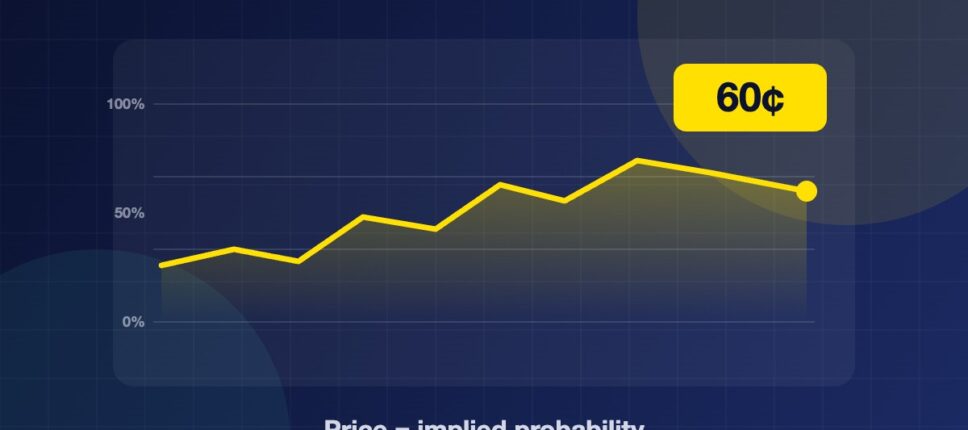
Each market asks a yes-or-no question. A contract settles at $1 if the event happens and at $0 if it does not.
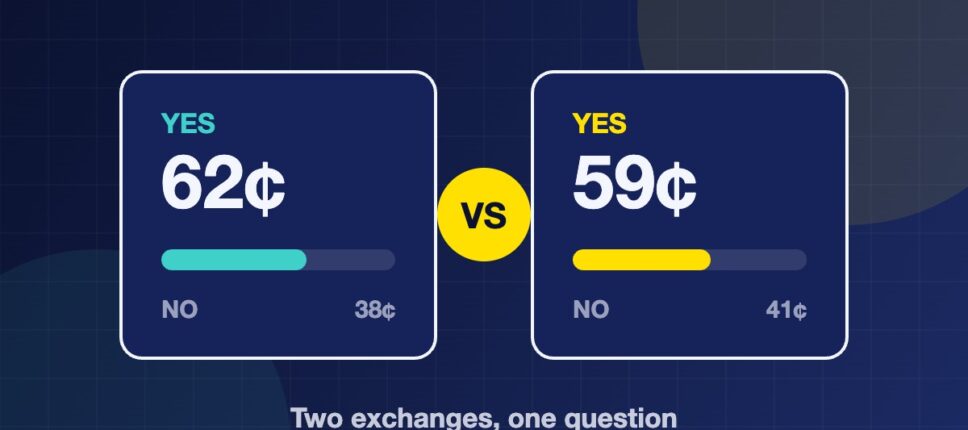
Prices come from other traders. They update whenever a buy and a sell order match in the central order book, and the documentation says Polymarket US does not set prices or take the other side of your trades.
There is one instrument per outcome. When you buy No, the exchange records a short position in that instrument. At a price of $0.70, a Yes buyer can lose $0.70 per contract or gain $0.30.
How do you place an order?
In the app, open a market, choose Yes or No, enter a dollar amount or tap Max, and swipe up to confirm. Two order types are available in the app and on the web.
| Order type | How it fills | Unfilled part |
|---|---|---|
| Market | Right away, within a limit based on your quoted price | Canceled, never rests on the book |
| Limit | At your price or better | Stays open unless set to Immediate or cancel |
You can sell before a market resolves. The proceeds go to your cash balance immediately.
What are Polymarket’s fees in the US?
The standard fee schedule took effect on October 28, 2026. It charges the taker, which is the side whose order removes liquidity from the book:
Fee = Θ × contracts × price × (1 – price)
Θ depends on your taker volume over the previous 30 days.
| Tier | 30-day taker volume | Θ | Fee, 100 contracts at $0.50 |
|---|---|---|---|
| 1 | Below $10,000 | 0.095 | $2.38 |
| 2 | $10,000 to under $50,000 | 0.085 | $2.12 |
| 3 | $50,000 to under $250,000 | 0.075 | $1.88 |
| 4 | $250,000 or more | 0.0695 | $1.74 |
The schedule is as of November 2026. The Tier 4 dollar figure is the exchange’s own example. We calculated the others from the published formula and rounding rule.
The fee is highest at a price of $0.50 and shrinks toward $0 and $1. At Tier 1, 100 contracts at $0.50 cost $50 plus a $2.38 fee, about 4.8% of the amount spent. At $0.90 they cost $90 plus about $0.86, just under 1%.
New accounts get the 0.0695 coefficient for their first seven days. Resting orders that get filled pay no fee on standard markets. Combos have their own fee curve, and from November 14, 2026 resting combo orders pay a fee as well.
The documentation describes withdrawals as free and lists no deposit fee. The terms say you are responsible for taxes on your activity. This is not tax advice.
How do markets resolve?
Each market’s rules name the sources that decide the outcome: government bodies for political and economic data, the governing league for sports, a named reference index for crypto prices, and specific news outlets where the rules list them.
Sports markets often resolve shortly after the official result. Political markets can take longer when certification is required. Some markets carry alternative settlement terms, shown under Market Rules on the market page. Resolutions are final under the exchange rulebook.
How do you withdraw?
Open Portfolio, tap Withdraw, tap “Send to” and choose a method. The options are debit card, ACH, Apple Pay, PayPal or Venmo if you deposited with them, and USDC to a crypto wallet on iPhone where available. Wire withdrawals go through support. Card and ACH withdrawals typically arrive in 3 to 4 business days.
Three rules apply:
- Deposits must fully clear first.
- Money returns to the same payment method you deposited with. It cannot be sent to a new or third-party account.
- Withdrawals follow deposit order. If you deposit $100 by debit card and later $200 by ACH, the first $100 you withdraw returns to the card.
The documentation does not say whether a USDC withdrawal is open to money that arrived another way.
What goes wrong most often?
- Waiting too long on a stuck deposit. If one is still pending after 5 business days, the documentation says to contact support.
- Expecting promotional credit as cash. Credits shown as Bonus cannot be withdrawn, although profits made with them can.
- Leaving limit orders open into Thursday morning. All open orders are canceled before the weekly maintenance window, Thursdays from 6am to 8am ET.
Polymarket US is a federally regulated exchange. The offshore crypto betting sites we cover elsewhere are different: offshore crypto sportsbooks and casinos hold no US state license, and whether crypto gambling is legal depends on your state.
Gambling should stay entertainment. If it stops being that, call the National Problem Gambling Helpline at 1-800-MY-RESET (1-800-697-3738).
Sources
- CFTC, “Designated Contract Markets (DCM): QCX LLC d/b/a Polymarket US”
- Polymarket US Documentation, “Polymarket US” (App Users section)
- Polymarket US Documentation, “Fee Schedule”
- Polymarket App, “Terms & Conditions”
- Polymarket Help Center, “Geographic Restrictions”
- Polymarket Help Center, “How to Deposit”
Bitcoin Casinos vs. Regular Casinos FAQ
Polymarket US is. The CFTC lists it as a designated contract market, while the international polymarket.com lists the United States as a blocked country. The official pages publish no state-by-state list.
The Polymarket US documentation lists USDC as a funding and withdrawal method on iPhone, where available. It does not state the network, the minimum or the locations, so the deposit screen in your app is the place to check.
On Polymarket US, takers pay Θ × contracts × price × (1 – price), with Θ at 0.095 for accounts under $10,000 in 30-day taker volume, as of November 2026. By our calculation that is $2.38 on 100 contracts at $0.50.


Latest News