- >News
- >What Is KYC in Crypto? ID Checks, US Rules and the Limits of No-KYC


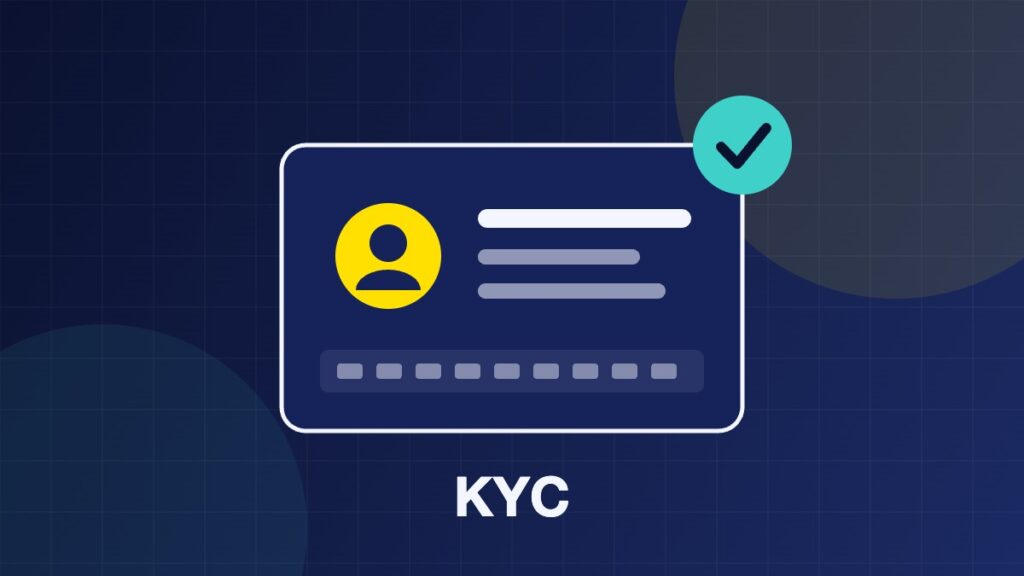
KYC means “know your customer”. In crypto it is the identity check an exchange runs before it lets you use the full account: your legal name, date of birth, address, a government ID and often a photo of your face. US exchanges do it because FinCEN treats businesses that accept and transmit crypto as money transmitters under the Bank Secrecy Act. That status comes with an anti-money laundering program, and the program has to include verifying who the customer is.
KYC at a glance
| Question | Short answer |
|---|---|
| What KYC stands for | Know your customer |
| US law behind it | Bank Secrecy Act of 1970, administered by FinCEN |
| How long records are kept | Five years for records the rules require |
| Does “no KYC” mean never | No. The platform’s terms decide |
This article reports what the federal rules and two exchanges’ help pages say as of November 2026. It is not legal advice.
Why do crypto exchanges need your ID?
The Bank Secrecy Act (BSA) dates from 1970. FinCEN, which administers it, says the original law required banks to report cash transactions over $10,000, identify the people conducting transactions and keep records. The USA PATRIOT Act of 2001 expanded anti-money laundering (AML) program requirements to all financial institutions.
Crypto came under these rules through FinCEN’s definition of a money transmitter. In guidance issued on May 9, 2019 (FIN-2019-G001), FinCEN said that persons accepting and transmitting convertible virtual currency must register with it as a money services business (MSB). They must also comply with AML program, recordkeeping, monitoring and reporting requirements. The guidance describes exchangers and hosted wallet providers in those terms.
The AML program rule for MSBs (31 CFR 1022.210) requires a written program. Its policies must cover verifying customer identification, filing reports, keeping records and responding to law enforcement requests. The rule does not give exchanges a list of documents to collect. It says the program must be “commensurate with the risks” of the business, which leaves each exchange to design its own checks.
Federal registration is separate from state licensing. An MSB must register with FinCEN “whether or not licensed as a money services business by any State”. State licensing is outside this article.
Three federal numbers sit behind most ID and paperwork requests, as of November 2026:
| Rule | Threshold | Regulation |
|---|---|---|
| Suspicious activity report (SAR) | Suspect transactions of at least $2,000 | 31 CFR 1022.320 |
| Transfer records and travel rule | Transfers of $3,000 or more | 31 CFR 1010.410 |
| Record retention | Five years | 31 CFR 1010.430 |
The $2,000 figure applies when the business knows, suspects or has reason to suspect illegal activity or evasion of the rules. For a transfer of $3,000 or more, a financial institution other than a bank has to keep the sender’s name and address, the amount and the date. It also has to pass that information along with the transfer order.
What documents does KYC verification ask for?
Coinbase and Kraken publish their requirements. As of November 2026:
| Item | Coinbase (US signup) | Kraken |
|---|---|---|
| Personal details | ID shows legal name, birth date, address or country | Email, name, birth date, phone, address, occupation |
| Tax number | Not listed on the help page | Social Security Number or Tax ID, US clients |
| Government ID | Driving license, passport, passport card and others | Valid ID |
| Proof of address | Bank statement, credit card statement or utility bill | Proof of address, or a face photo instead |
| Face photo | Selfie during verification | In some situations |
Coinbase accepts proof of address documents issued within the last three months. Kraken says that, depending on your country, it asks for a face photo when it cannot confirm your address automatically.
Coinbase says you get a notice of the review status within 24 hours of finishing the process.
How do verification tiers work?
A tier links what you can do on the account to how much the exchange knows about you. Kraken’s help page, last updated October 1, 2026, lists two levels: “Verification” and “Verification with higher limits”. Both need the same identity details and a valid ID. The higher level adds a KYC questionnaire and two-factor authentication at sign-in.
Coinbase’s help page describes one step. Accounts have limited functionality until verification is complete, and Coinbase repeats the check periodically for recordkeeping.
Limits per tier change, so check the exchange’s own limits page on the day you sign up.
What happens to your KYC data?
Records that FinCEN’s rules require must be kept for five years. A copy of any SAR, plus its supporting documentation, is kept for five years from the filing date. The retention rule makes no exception for closed accounts, so expect an exchange to hold required records after you leave.
Your data can also go to the government. The AML program has to include procedures for responding to law enforcement requests, and SARs are filed with the Treasury Department. You will not be told if one is filed about you. The rule makes SARs confidential and bars the business and its staff from revealing that one exists.
Anything else, including marketing use and sharing with vendors, is governed by the exchange’s privacy policy. Read it before you upload a passport.
KYC vs AML: what is the difference?
KYC is one part of AML. AML is the full program a regulated business has to run, and KYC is the step where it identifies you. Besides identity verification, the MSB rule requires a designated compliance person, staff training and an independent review of the program.
What does “no KYC” really mean?
It can mean two things.
The first is a service that never holds your money. FinCEN’s 2019 guidance says a trading platform that only provides a forum for buyers and sellers to post bids and offers, with the parties settling through their own wallets, does not qualify as a money transmitter. A person using an unhosted wallet to buy goods or services on their own behalf is not one either. Our guide to custodial vs non-custodial wallets covers the difference between hosted and unhosted wallets.
The second is a custodial platform that lets you sign up and deposit without uploading ID. Here “no KYC” describes the signup. The platform’s terms decide what it can ask for later. Being based abroad does not put a platform outside US rules. FinCEN says its requirements apply to foreign-located crypto money transmitters doing business in whole or in substantial part within the United States, even with no physical presence here.
A later check usually arrives as a request for documents, and it can include proof of where the money came from. The SAR rule expects a regulated business to look at “the background and possible purpose” of a transaction that has no apparent lawful purpose. Our list of the best no-KYC crypto exchanges covers platforms of this second kind.
What goes wrong most often with KYC?
Uploading ID through the wrong page is the costly mistake. Coinbase says it will not ask you to verify on a non-Coinbase domain and tells customers never to email ID photos to support. Start verification from inside your account.
Rejected documents come next. Coinbase asks for a valid ID that is fully visible, does not accept expired or temporary IDs, and tells customers to wait at least 30 minutes between attempts.
Some people split transfers into smaller amounts to stay under a threshold. This is called structuring. The Money Laundering Control Act of 1986 prohibited structuring transactions to evade currency transaction reports, and the SAR rule for MSBs names structuring as a reason to file a report.
What to check before you deposit on a no-KYC platform
A “no KYC” label is the platform’s own description of its signup. It does not tell you what the terms allow the platform to request once your balance is there. Read the terms first. That applies to exchanges and to offshore crypto casinos.
- Find the verification clause. See whether the platform can request ID or source-of-funds documents at any time, and what happens to your balance if you decline.
- Look for a withdrawal limit on unverified accounts.
- Check which documents it accepts, so you know you could pass if asked.
- Keep the purchase and withdrawal records from the exchange where you bought your crypto. They show where the funds came from.
Offshore crypto casinos hold no US state license, and whether you can legally use one depends on your state. Our article on whether crypto gambling is legal in the US covers that question, and our page on no-KYC crypto casinos deals with ID checks on gambling sites.
Gambling should stay entertainment. If it stops being that, call the National Problem Gambling Helpline at 1-800-MY-RESET (1-800-697-3738).
Sources
- FinCEN, “History of Anti-Money Laundering Laws”
- FinCEN, “Application of FinCEN’s Regulations to Certain Business Models Involving Convertible Virtual Currencies” (FIN-2019-G001)
- eCFR, “31 CFR Part 1022, Rules for Money Services Businesses”
- eCFR, “31 CFR Part 1010 Subpart D, Records Required To Be Maintained”
- Coinbase Help, “Verify your identity on Coinbase”
- Kraken Support, “Verification requirements”
Bitcoin Casinos vs. Regular Casinos FAQ
Yes, for businesses that accept and transmit crypto for customers. FinCEN says they must run an AML program, and the program rule requires policies for verifying customer identification.
Sometimes. A service that never takes custody of your funds may fall outside FinCEN’s money transmitter definition. A custodial platform that skips ID at signup can still ask for it later under its terms.
No. AML is the whole compliance program, and KYC is the identity verification part of it.



Latest News